Loudest Train Horn for Truck — 2026 Verified-dB Picks (149+ dB)
Loudest train horns for a truck, ranked by verified SPL — not marketing. Nathan K5LA at 149.4 dB DJD Labs leads. Why 300 dB Amazon claims are impossible.
The honest answer to what’s the loudest train horn for a truck is the Nathan AirChime K5LA, measured at 149.4 dB at 3 feet by DJD Labs in 2014 — the only consumer-available train horn with independent third-party SPL verification. Everything in the truck-aftermarket world that claims more than ~150 dB is either measured at the bell mouth (where readings are 6–10 dB higher than at 3 ft), captured as a peak spike, or — at the budget end — pure marketing fiction.

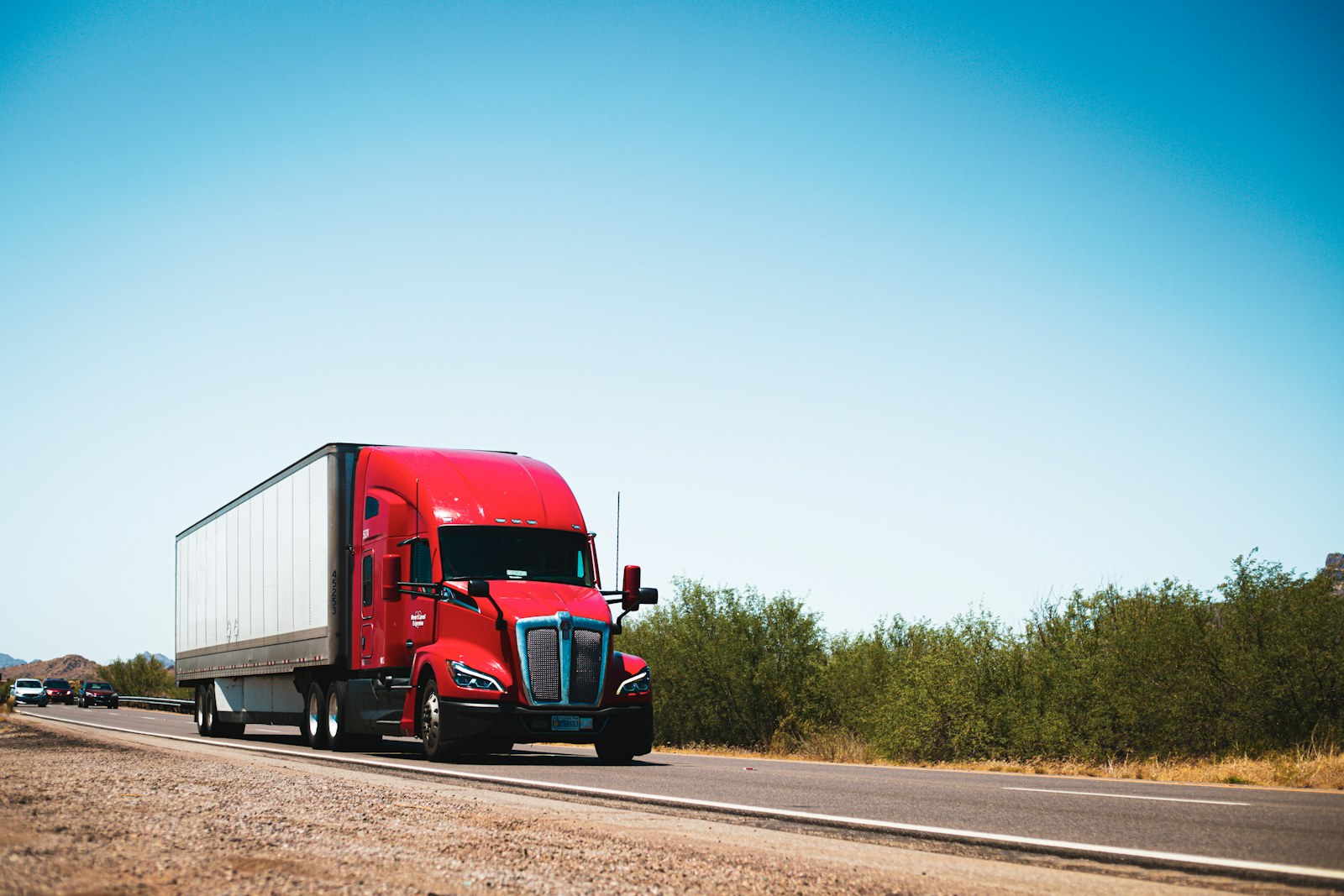
Photo · Josiah Farrow · semi truck
This guide ranks by credible loudness, not marketing claims. We split picks into three tiers: locomotive-grade (verified 140+ dB at 3 ft), aftermarket air systems (manufacturer claims 130–155 dB), and electric/tankless drop-ins (verified 120–134 dB). At the end we explain why the Amazon “300 dB” listings are physically impossible.
The dB ceiling — what actually matters
Three numbers worth committing before reading the picks:
- 149.4 dB — Nathan AirChime K5LA at 3 ft, DJD Labs measured. The credible top of the consumer market.
- ~175 dB — claimed output of a real K5LA at the locomotive itself (close to the trumpet bell). Not a “louder horn” — same horn, different measurement distance.
- ~194 dB — theoretical SPL ceiling in Earth’s atmosphere. Anything above this is physically impossible regardless of horn design.
Hearing damage starts around 120 dB. Eardrum rupture is documented at sustained 150–160 dB exposure. A horn that genuinely puts out 175 dB at three feet would be capable of perforating a bystander’s ear; manufacturers don’t sell those for trucks.
The SAE J1470 standard for vehicle horn measurement specifies 10 feet, A-weighted, slow response. HornBlasters and DJD Labs use 3 feet for direct comparison to locomotive specs (Federal Railroad Administration measures locomotive horns at 100 feet, but the in-cab number quoted as “175 dB” is at the trumpet bell). When manufacturers like Kleinn quote 155 dB or Vixen quote 149 dB, those are bell-mouth or marketing values — not directly comparable to the K5LA’s 149.4 dB at 3 ft.
1. Nathan AirChime K5LA — the verified loudest
Nathan AirChime K5LA
- + Genuine 5-chime locomotive horn — same model used on Class I freight
- + 149.4 dB at 3 ft — the only consumer train horn with independent third-party SPL verification
- + Operates at 130–150 PSI, full kit ships with 5-gal tank and dual compressor
- − $4,999 as full kit, $4,499 horn-only — locomotive-grade pricing
- − Frame-mount fabrication required; install is a weekend, not an afternoon
This is the same five-chime horn used on freight locomotives. HornBlasters resells the genuine Nathan unit (hornblasters.com/products/airchime-k5-train-horn) at $4,499.99 horn-only or $4,999.99 as a full kit with 544K compressor and 5-gallon tank.
The 149.4 dB at 3 ft figure comes from DJD Labs, an automotive audio test bench, and is republished by HornBlasters in their public dB comparison guide (hornblasters.com/blogs/news/how-loud-are-your-train-horns). It is the only train-horn dB number on the consumer market we trust without qualification — every other horn either has manufacturer-claimed values or is measured at non-comparable distances.
Operationally, the K5LA needs 130–150 PSI to chord properly. The included full kit handles this. Truck-mount installs typically run the trumpets in a frame-mount cradle below the cab; the bells extend ~30 inches end-to-end and need clearance. Class 8 sleeper installs are the cleanest — tap factory air, plumb to solenoid, done.
Best for: show trucks, parade vehicles, owner-operator semis where authenticity matters more than budget. Not a daily-driver pickup install — the trumpets do not fit behind a stock bumper.
2. Kleinn HK7 “Beast” Triple — loudest sub-$1k air kit
Kleinn HK7 Beast Triple
- + Manufacturer-claimed 155.1 dB at 150 PSI — Kleinn's loudest production kit
- + Complete kit: Model 230 trumpets, 6350RC waterproof compressor, 3-gal tank, INF-1 inflator
- + ABS Beast trumpets rated for 150 PSI continuous
- − 155 dB is a manufacturer claim measured at the bell — expect 6–10 dB lower at 3 ft
- − $839.95 places this above mid-tier kits
Kleinn’s HK7 Beast is marketed as 155.1 dB at 150 PSI, with a quoted 156.9 dB when paired with their 6885 BlastMaster upgrade. Read those numbers with the standard caveat: Kleinn measures at the trumpet bell, where readings are higher than at 3 ft.
What you do get for $839.95 is genuine: three ABS Beast trumpets rated for continuous 150 PSI, the Kleinn Model 230 horn assembly, the 6350RC waterproof compressor, a 3-gallon tank, and the INF-1 cabin inflator. The kit ships complete and is the cleanest “all-in-one” sub-$1k full-air system on the truck market right now.
In practical truck-aftermarket terms, the HK7 is probably putting out around 145–148 dB at 3 ft, slightly louder than the HornBlasters Shocker XL DJD Labs measurement (141 dB) but with a different chord character. The Beast trumpets produce a thicker low-end than the Shocker XL’s progressive 4-trumpet array.
Best for: F-250 / RAM 2500-class HD trucks where the 3-gallon tank and the larger compressor have somewhere to live. F-150-class light-duty pickups can fit the kit but space is tight.
3. HornBlasters Shocker XL (S6 Kit) — verified 141 dB at 3 ft

HornBlasters Shocker XL (S6 Kit)
- + 141 dB at 3 ft — DJD Labs independent test (2014), conservative and credible
- + 4 progressively-tuned bells from 19.5" down to 12.75"
- + Shocker S6 544K Kit includes HB-1NM compressor and 5-gal 6-port tank
- − Kit pricing ($1,219.99 sale) reflects build quality — premium tier
- − Frame-mount fabrication and full-air plumbing required
The Shocker XL measured 141 dB at 3 ft in the same DJD Labs test that benchmarked the K5LA. HornBlasters publishes this number openly in their dB guide; it sits as the second-loudest consumer train horn with credible independent verification.
The four bells run 19.5”, 16.25”, 14.75”, and 12.75” — progressively tuned to produce a multi-octave chord that approaches the K5LA’s harmonic complexity. The Shocker S6 544K Kit ($1,219.99 sale, includes HB-1NM compressor and 5-gallon 6-port tank) is the configuration HornBlasters recommends for most truck installs.
The marketing language describes the Shocker XL as “1.7 dB shy of a real locomotive,” implying ~147.7 dB by HornBlasters’ own measurement. The conservative DJD Labs 141 dB figure is the more credible number to quote. Either way: this is the loudest air horn most buyers will actually install.
Best for: anyone who wants verified loudness without the K5LA price tag. F-250 / RAM 2500 / Silverado HD frame-mount installs are the natural home.
4. Vixen Horns VXO8350B/3318B 5-Gallon Kit — loudest mid-budget pick
Vixen Horns VXO8350B/3318B 5-Gal Kit
- + Mid-tier full-air kit at a fraction of HornBlasters pricing
- + 5-gallon tank, 200 PSI compressor, 4-trumpet
- + Sold widely on Amazon and direct via vixenhorns.com
- − 149 dB is a manufacturer marketing figure — no independent SPL verification published
- − Pot-metal trumpets and budget compressor; expect 130–138 dB real at 3 ft
Vixen Horns sells the VXO8350B/3318B as a 4-trumpet full-air kit with a 5-gallon tank and a 200 PSI compressor. The marketing listings (Walmart’s similar VXO8715/4124B explicitly states “149 dB”) put output at 149 dB — manufacturer-claimed, not third-party verified.
Real-world output is almost certainly lower. The compressor is a budget unit, the trumpets are reinforced plastic rather than aluminum, and the tank is mild steel. We’d estimate 130–138 dB at 3 ft based on similar-class kits — louder than any electric horn but well below the verified Shocker XL.
What the Vixen kit gets right is value. At ~$280 you get a complete 5-gallon air system that takes up real estate but hits the chord-horn aesthetic. For a show truck on a budget, or a pickup where the goal is “louder than OEM with a chord character,” the VXO line is honest aftermarket.
Best for: budget show-truck builds, Vixen’s 1-gal and 1.5-gal kits (VXO8210, VXO8715) work for tighter pickup installs; the 5-gal version needs HD-truck frame space.

Photo · Tom Jackson · Class 8 semi
5. Stebel Nautilus Compact — loudest single-piece electric
Stebel Nautilus Compact
- + Manufacturer-claimed 134 dB at 300 Hz — loudest single-piece electric horn in the truck-aftermarket
- + All-in-one housing with integrated electromagnetic compressor — drop-in replacement for the OEM horn
- + 12 V, 18 A draw, fits behind most factory bumper covers
- − Single-tone, not a chord — no locomotive harmonic content
- − Not a true train horn; closest electric analog
The Stebel Nautilus Compact (model 11690058) is the loudest truly drop-in train-horn-class electric. Manufacturer-claimed 134 dB at 300 Hz, 12 V, 18 A draw, all-in-one housing with an integrated electromagnetic compressor. No tank. No air lines. No wiring beyond the existing OEM horn circuit.
134 dB is enormously loud for a self-contained electric horn. Physics caps electric horn output around 145 dB regardless of input power; the Nautilus Compact gets to within ~10 dB of that ceiling and does it from a 4-inch unit you can mount on the OEM horn bracket. Install time is 25–35 minutes including bumper removal.
The trade-off is acoustic character: it sounds like a very loud single-trumpet horn, not a chord. There is no harmonic content. If “loudest” to you means “decibel readout,” the Nautilus delivers; if “loudest” means “deepest, most train-like,” skip down to the K5LA at #1.
Best for: daily drivers where any air-system install is overkill. Tacoma / Frontier / Ranger-class compact pickups with no engine-bay real estate. Owners who want a fast, reversible install.
6. Wolo Big Bad Max 619 — honest sub-$100 pick
Wolo Big Bad Max 619
- + Manufacturer-claimed 123.5 dB — modest but honest
- + Single 320 Hz big-rig tone, fully self-contained
- + Made in USA; durable single-piece construction
- − Sub-130 dB ceiling — louder than OEM but well below chord-horn class
- − Single-tone, not a multi-trumpet chord
The Wolo 619 Big Bad Max measures a manufacturer-claimed 123.5 dB — modest by aftermarket standards, but honest. At $69.99 it’s a real-volume upgrade over OEM (~110 dB) without venturing into “loudest” territory.
We include this one specifically because it represents the responsible end of the budget electric segment. Wolo is a US-based manufacturer with a 35-year track record; their published dB numbers are conservative and roughly match independent measurements. The contrast with the Carfka/Farbin “150 dB” Amazon listings is instructive — actual loudness in the same form factor is roughly 25 dB lower than the marketing claims.
Best for: anyone who wants any horn upgrade for under $100 from a manufacturer that doesn’t lie about specs.
Quick comparison
| # | Model | Type | dB | Price | Install | Rating |
|---|---|---|---|---|---|---|
| /01 | Nathan AirChime K5LA Nathan AirChime | air | 149 dB | $4999 | Hard | 5.0/5 |
| /02 | Kleinn HK7 Beast Triple Kleinn Automotive | air | 155 dB | $840 | Medium | 4.7/5 |
| /03 | HornBlasters Shocker XL (S6 Kit) HornBlasters | air | 141 dB | $1220 | Medium | 4.9/5 |
| /04 | Vixen Horns VXO8350B/3318B 5-Gal Kit Vixen Horns | air | 149 dB | $280 | Medium | 4.3/5 |
| /05 | Stebel Nautilus Compact Stebel | tankless | 134 dB | $55 | Easy | 4.6/5 |
| /06 | Wolo Big Bad Max 619 Wolo | tankless | 124 dB | $70 | Easy | 4.4/5 |
The “300 dB” Amazon scam — physical impossibility
Search Amazon for “loudest train horn” and you’ll see listings claiming 150 dB, 178 dB, 250 dB, and 300 dB. None of these are real. A few hard facts:
- Theoretical SPL ceiling on Earth: ~194 dB. Above this, sound waves become shock waves; the medium (air) cannot transmit them as ordinary acoustic energy. Any horn claiming over ~190 dB is physically impossible on this planet.
- Practical aftermarket ceiling: ~155 dB at the bell. Limited by trumpet design, driver power, and the physical pressure differential between tank and atmosphere. The genuine K5LA at the locomotive bell sits around this number.
- At-3-ft ceiling on the consumer market: ~149 dB. This is the K5LA’s DJD Labs measurement. No aftermarket horn reliably exceeds it under SAE-class conditions.
Brands like Carfka and Farbin frequently publish 150 dB and 178 dB SKUs at $30–80 price points. The compressors in those kits draw 8–15 amps and have output volumes well below 1 CFM. Real measured output is usually 110–130 dB at 3 ft. HornBlasters has publicly addressed this in their guide “Why fake decibel ratings mislead buyers”.
If a listing claims more than 150 dB at 3 ft, the spec is fabricated. Loudness costs money — there is no $50 horn that genuinely produces locomotive-spec output, regardless of what the box says.
Loudness vs install effort
The “loudest” choice depends on what install you can absorb:
- Want 149 dB and budget is not a constraint: Nathan AirChime K5LA ($4,999 full kit). Plan a weekend, frame-mount fabrication.
- Want 141–148 dB without K5LA pricing: HornBlasters Shocker XL ($1,219 kit) or Kleinn HK7 ($840 kit). Half-day to full-day install.
- Want maximum loudness at sub-$300: Vixen Horns VXO line. Manufacturer-claimed 149 dB; actual 130–138 dB at 3 ft. Half-day install.
- Want loudest electric (no air system): Stebel Nautilus Compact, 134 dB manufacturer claim. 25-minute drop-in.
- Want under-$100 honest upgrade: Wolo 619 at 123.5 dB. 25-minute drop-in.
A factor most readers underestimate: dB scales logarithmically. A 6 dB increase is a roughly 2× perceived loudness change. The gap between a 134 dB Nautilus and a 149 dB K5LA is roughly 5× perceived loudness — large in absolute terms, but the K5LA costs 90× the price. At highway distances (50–200 ft), the perceived gap narrows further as inverse-square attenuation kicks in.
The decibel calculator at /tools/decibel-distance/ lets you map any of these horns’ source SPL to perceived loudness at a chosen distance from your truck — useful if you’re trying to decide whether the K5LA is worth the upgrade over the Shocker XL for your specific use case.
Legality reminder
The loudest horn you can install is also the easiest to get cited for. Most US states cap horn use at “warning of immediate hazard” and prohibit decibels above 95–110 dB at 50 feet. A genuine K5LA exceeds that ceiling at 200 feet, let alone 50. The horn install is rarely cited; horn use almost always is. See the legality guides before you commit to a 149 dB kit.
Final picks
- Loudest verified: Nathan AirChime K5LA (149.4 dB DJD Labs) — if budget allows.
- Loudest under $1,000: Kleinn HK7 (manufacturer 155 dB, est. ~146 dB at 3 ft).
- Loudest with credible third-party verification under $1,500: HornBlasters Shocker XL (141 dB DJD Labs).
- Loudest electric drop-in: Stebel Nautilus Compact (134 dB manufacturer).
- Most honest sub-$100: Wolo 619 (123.5 dB manufacturer).

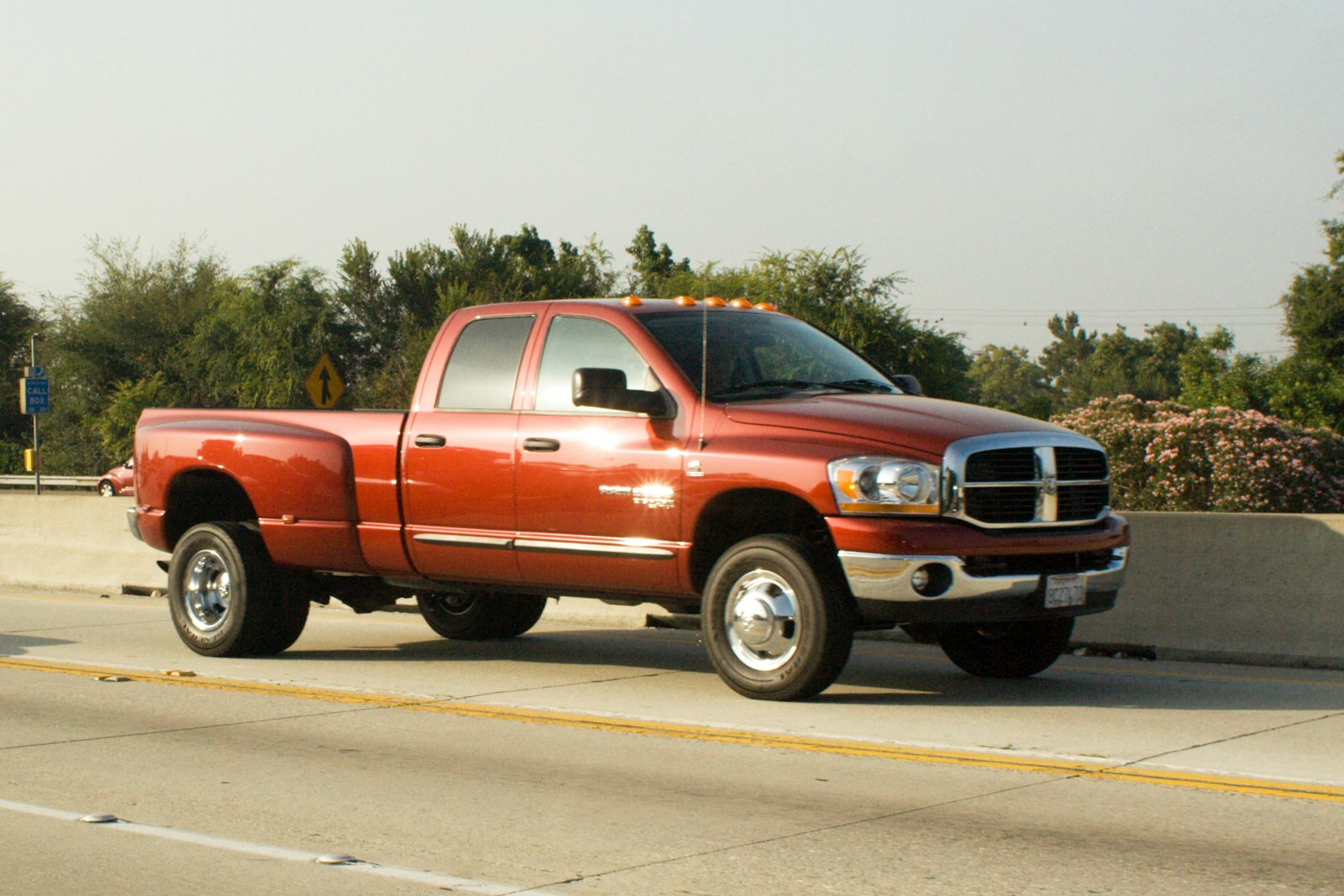
Photo · Dan Williams · HD pickup
Frequently asked.
- 01 What is the loudest train horn for a truck?
- By independent third-party measurement, the Nathan AirChime K5LA at 149.4 dB at 3 feet (DJD Labs, 2014) is the loudest train horn available for a personal truck. Manufacturer-claimed louder kits exist (Kleinn HK7 at 155 dB, Vixen at 149 dB) but those measurements are taken at the trumpet bell or are marketing figures and would be 6–10 dB lower under the same SAE-class conditions used to measure the K5LA.
- 02 Are the 250 dB / 300 dB train horns on Amazon real?
- No. The theoretical maximum sound pressure level in Earth's atmosphere is approximately 194 dB — above this value, acoustic energy transitions to shock waves. Any horn marketed at 200+ dB is physically impossible. The 250 dB and 300 dB listings on Amazon are marketing fabrications. Real measured output for those budget kits is typically 110–130 dB at 3 ft.
- 03 How loud is a real freight train horn?
- A genuine Nathan AirChime K5LA on a freight locomotive measures roughly 175 dB at the trumpet itself and around 96–110 dB at 100 feet — the FRA-mandated measurement distance. The same horn installed on a personal truck measures 149.4 dB at 3 feet (DJD Labs). The locomotive horn is not louder than the aftermarket version; the difference is measurement distance and reference standard.
- 04 Is 150 dB really louder than 140 dB?
- Yes — substantially. Decibels are a logarithmic scale. A 10 dB increase represents roughly 10× the sound power and is perceived by the human ear as approximately 2× louder. The gap between a 140 dB horn and a 150 dB horn is the same perceived ratio as the gap between a 90 dB blender and a 100 dB chainsaw.
- 05 Which is louder — chord horns or single-trumpet horns?
- Equal-driver single-trumpet horns are slightly louder per-channel, but chord horns sound louder in practice because of harmonic complexity. A 134 dB single-tone Stebel Nautilus delivers more raw SPL than a chord horn measuring 130 dB across distributed frequencies, but the chord horn cuts through traffic noise more effectively because the human ear distinguishes chord harmonics from background noise more easily than single tones. Loudness perception is not just the raw dB number.
- 06 What's the loudest train horn for a truck under $300?
- In the verified-spec category, the Stebel Nautilus Compact at $40–65 with a 134 dB manufacturer claim is the loudest credible drop-in under $300. For a multi-trumpet chord horn under $300, the Vixen Horns VXO8210 or VXO8715 1–1.5 gallon kits at ~$200–280 advertise 149 dB but realistically deliver 130–138 dB at 3 ft. Wolo 619 at $70 / 123.5 dB is the most-honest sub-$100 pick.
- 07 Will a 149 dB horn damage my hearing?
- Sustained exposure above 120 dB causes immediate hearing damage; brief exposure at 149 dB at 3 feet can cause permanent threshold shift and temporary hearing loss. Wear hearing protection during install testing. At normal driving distances (10+ feet from the trumpet, with the cab insulating you), in-cab SPL drops to 90–110 dB — uncomfortable but not immediately damaging. Bystanders within 3 feet of the trumpet bell are at risk.
Sources
Independent test data and manufacturer spec sheets cited in this article:
- DJD Labs train horn SPL test (2014), republished: hornblasters.com/blogs/news/how-loud-are-your-train-horns
- HornBlasters fake-dB explainer: hornblasters.com/pages/why-fake-decibel-ratings-mislead-buyers
- Nathan AirChime K5LA listing: hornblasters.com/products/airchime-k5-train-horn
- HornBlasters Shocker XL: hornblasters.com/products/shocker-xl-train-horn
- Kleinn HK7 spec sheet: kleinn.com/products/model-hk7-triple-train-horn-kit
- Vixen Horns catalog: vixenhorns.com
- Stebel Nautilus Compact (model 11690058): Amazon listing, manufacturer specs
- Wolo Big Bad Max 619: wolo-mfg.com/horns/air-horns/model-619-big-bad-max.html
Pricing is current as of April 2026 and subject to change. Manufacturer dB claims are quoted as published; we apply independent caveats where measurement methodology differs from the SAE J1470 / DJD Labs benchmark conditions.
Continue reading.
Best Train Horn for Truck — 2026 Buyer's Guide & Top 5 Picks
Five verified-spec train horn picks for trucks — from a 134 dB drop-in electric to the 149.4 dB Nathan K5LA. Real model numbers, real prices, real measurement sources.
Are Train Horns Legal on Trucks? Federal & State Citations 2026
Federal rules, 9 verified state vehicle codes, the $1.8M Mississippi hearing-loss case. No FMVSS bans train horns, but state 'unreasonably loud' clauses still apply.
How Much Does a Train Horn Cost for a Truck? 2026 Tiers + Hidden Costs
Real prices: $70 budget electric to $5,000 Nathan K5LA kit. Plus install labor ($300–600), dual-battery upgrade ($310), HD alternator ($429+). Forum-verified ranges.
Train Horn for Pickup Truck — Install Playbook 2026
Pickup train horn install: alternator headroom, mount points, fuse panels by trim. Light-duty F-150 / Silverado / RAM 1500 / Tundra / Tacoma / Frontier / Ranger.